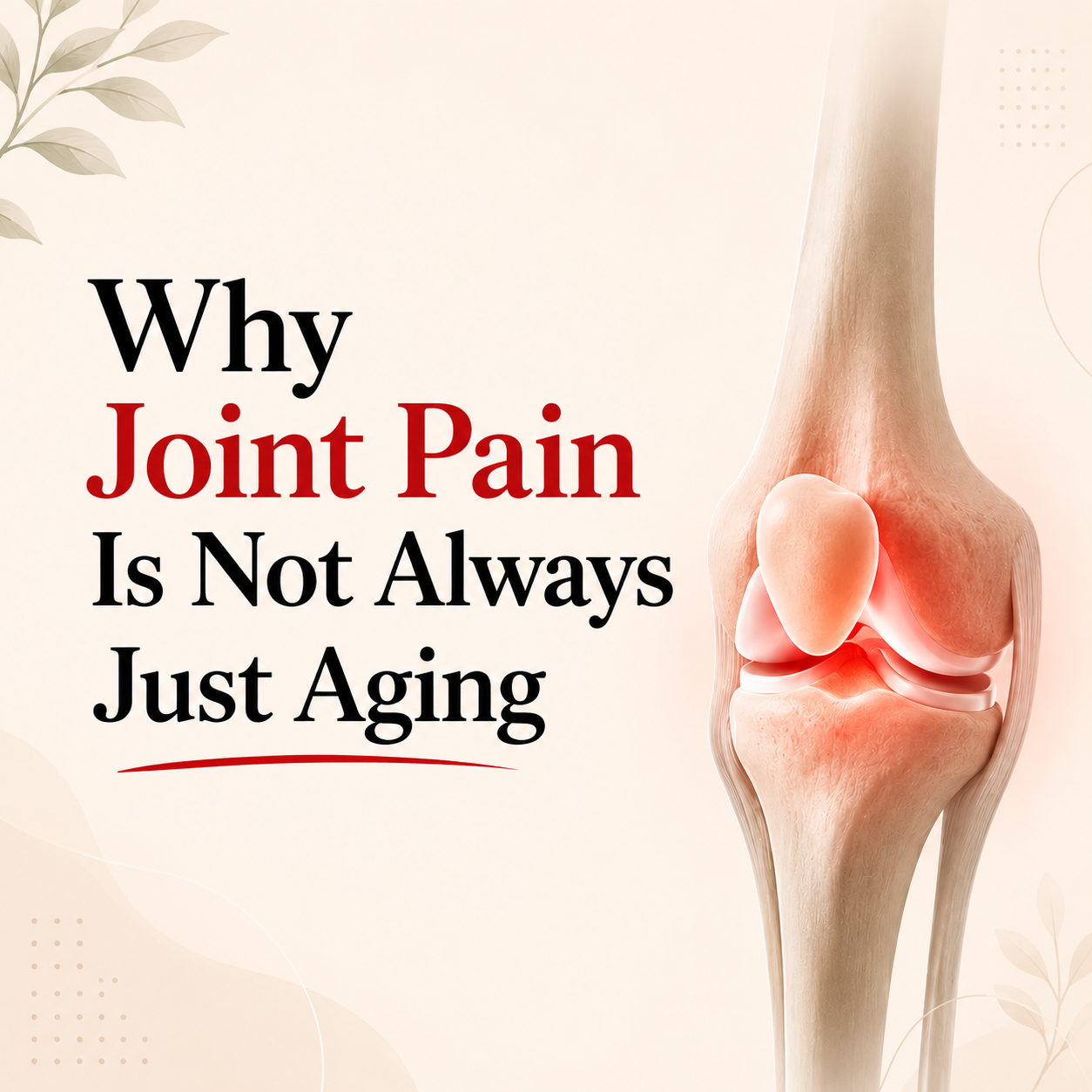
Why Joint Pain Is Not Always Just Aging
Dr. Janet’s Journey Into Chiropractic Care
During a recent Wellness Wednesday conversation, Dr. Janet shared something that immediately made the discussion feel personal and real.
She said she knew back in eighth grade that she wanted to become a chiropractor.
She grew up around medicine. Her family included anesthesiologists, OB-GYNs, and other medical professionals. But even at a young age, she knew she wanted a different path. She did not want to work in surgery or procedures. She wanted to work with her hands and help people better understand why they might be hurting in the first place.
Now, after nearly 40 years of helping people with joint pain and mobility issues, she says she has seen a noticeable shift.
Joint pain is no longer something she only sees later in life.
She is seeing it more and more in younger people, too.
Teen athletes.
Active adults.
People in their twenties and thirties.
People who assume they are “too young” to already be dealing with stiffness, inflammation, or recovery issues.
And honestly, I think that surprises a lot of people.
Because many of us grew up believing joint pain was simply part of getting older.
But maybe there is more contributing to it than most people realize.
Joint Pain Is Showing Up Earlier
One thing that came up during the conversation was how much repetitive stress people now place on their joints, especially among younger athletes and highly active adults.
Sports.
Training.
Overuse.
Constant impact.
But something else that stood out was food.
Processed foods.
High sugar intake.
Poor nutrition.
Inflammatory stress is building over time.
She explained that joints rely on hydration, circulation, nutrients, collagen, and recovery to function well.
And when stress and inflammation continue building faster than recovery can keep up, discomfort often follows.
I think that distinction matters.
Because people are often quick to blame age when their bodies start feeling different. But there are usually many factors involved.
Sleep.
Stress.
Nutrition.
Movement.
Recovery.
Those things add up over time.
Looking Beyond Temporary Relief
One part of the conversation that really stood out to me was when she talked about how common it is for people to simply try to quiet pain.
Ibuprofen.
Steroids.
Injections.
Temporary relief.
And to be clear, this is not about judging medical support at all. There is absolutely a time and place for it.
But she explained something very simply.
If pain keeps returning, eventually the question becomes:
Why is it happening in the first place?
That changes the conversation completely.
Sometimes people come in with joint pain and cannot even point to a specific injury.
They did not fall.
They did not twist something.
They simply woke up hurting.
That is when you start looking deeper.
Has inflammation been building?
Has recovery been poor?
Has stress been nonstop?
Has hydration been off?
Has nutrition changed?
Pain is not always the root issue.
Sometimes it is the warning sign that something underneath needs attention.
And I think more people are starting to realize they no longer just want temporary relief. They want to better understand what may be contributing to their feelings.
The Food and Inflammation Connection
One story she shared was incredibly relatable.
She talked about the holiday season when patients constantly brought sweets and baked goods into the office.
Cookies.
Candy.
Pumpkin rolls.
Treats everywhere.
And during that period, she suddenly started experiencing severe pain in her foot and ankle. At one point, she thought she may have injured herself.
But when she stopped and looked at what had changed, one thing stood out.
Her sugar intake had gone way up.
That became a huge moment of awareness for her.
Not fear.
Not restriction.
Just awareness.
Because what we consistently give our bodies matters.
Processed foods and excess sugar may increase inflammatory stress in some people, which can sometimes manifest as stiffness, swelling, discomfort, or slower recovery.
And honestly, I think a lot of people never even realized there could be a connection there.
Most of us were taught to think mainly in terms of calories, not necessarily how food may influence inflammation, energy, and recovery over time.
Why Gentle Movement Matters
I also liked how realistic she was about movement.
Because when people are hurting, movement can feel intimidating.
If your knees ache or your hips are stiff, exercise may be the very last thing you feel like doing.
But complete inactivity can create even more stiffness over time.
She emphasized starting small.
Not intense workouts.
Not punishing routines.
Just movement.
A short walk.
Stretching.
Swimming.
Chair tai chi.
Five minutes outside.
She shared something so simple that I loved:
“The best exercise is the one you will actually do.”
That takes so much pressure off people.
Sometimes the goal is not pushing harder.
Sometimes it is simply rebuilding consistency little by little.
Hydration Is About More Than Water
Another part of the conversation that stood out was the topic of hydration.
Because hydration is not just about drinking more water.
It is also about helping the body properly absorb and use that water.
She explained that many people focus only on water intake without realizing the body also relies on minerals and electrolytes for proper hydration.
And when hydration is off, people often feel it.
Muscle tightness.
Cramping.
Fatigue.
Dry skin.
Stiffness.
Slower recovery.
That section felt especially important because so many people are dehydrated without fully realizing it.
Gut Health and Recovery
Another important part of the conversation was gut health.
Because it is not just about what we consume. It is also about what the body can properly absorb and use.
She discussed how gut health may influence inflammation, hydration, skin health, recovery, and overall wellness.
That matters because when digestion is struggling, nutrient absorption may become less efficient, too, which can affect repair and recovery over time.
I think this is why more conversations about wellness are starting to look at the bigger picture rather than viewing everything in isolation.
What Oxidative Stress Has To Do With Inflammation
At one point, the conversation shifted into oxidative stress and cellular health, which I always find fascinating because it connects to so many areas of wellness and aging.
She explained that oxidative stress creates wear and tear inside the body over time.
Every day life exposes us to stress from poor nutrition, lack of sleep, toxins, emotional stress, environmental stress, and inflammation.
The body is designed to handle stress.
But when oxidative stress builds faster than recovery can keep up with, it may become harder for the body to maintain healthy inflammatory responses.
She explained how supporting the body’s own antioxidant defenses may help support healthier cellular function overall.
And honestly, I think that is a very different conversation than simply chasing symptoms all the time.
Collagen Is About More Than Appearance
When most people hear “collagen,” they immediately think of beauty and skincare.
But collagen plays a much bigger role throughout the body.
During the conversation, Dr. Janet explained that collagen supports connective tissue, joints, muscles, skin, and arteries, and helps provide structure and flexibility throughout the body.
And as we age, collagen production naturally declines.
That part is normal.
But another important point she brought up was absorption.
Not all collagen is absorbed the same way, and the body also needs support to maintain and protect collagen over time.
I loved how she explained that, because most people only hear collagen discussed from a beauty perspective rather than from the standpoint of movement, flexibility, and recovery.
A Different Way To Look At Joint Pain
I think the biggest takeaway from the conversation was this:
Joint pain is not always just about age or wear and tear.
Sometimes it reflects how much stress, inflammation, recovery, nutrition, hydration, and lifestyle have been building over time.
And I say that gently because so many people have learned to normalize not feeling like themselves.
They push through.
Keep going.
Ignore it.
Until the discomfort gets louder.
What I appreciated most about this conversation was that it shifted the focus away from simply masking symptoms and toward understanding what may be contributing to them in the first place.
And honestly, I think it is a conversation more people are having.
If this conversation piqued your curiosity, I am always happy to share more from our Wellness Wednesday discussions.
No pressure.
Just information.
Remember to Do Things That Make You Smile
Health is wealth!
Monique Mannen