Have you ever heard something about our food, water, or air and thought, “My goodness, what are we supposed to do with all this?”
I have.
We’re hearing more about microplastics and the things we’re exposed to every day. It can feel overwhelming when we’re already trying to make good choices.
I want to understand what it means for our everyday lives. What are researchers finding? And what small changes can we make without turning everything upside down?
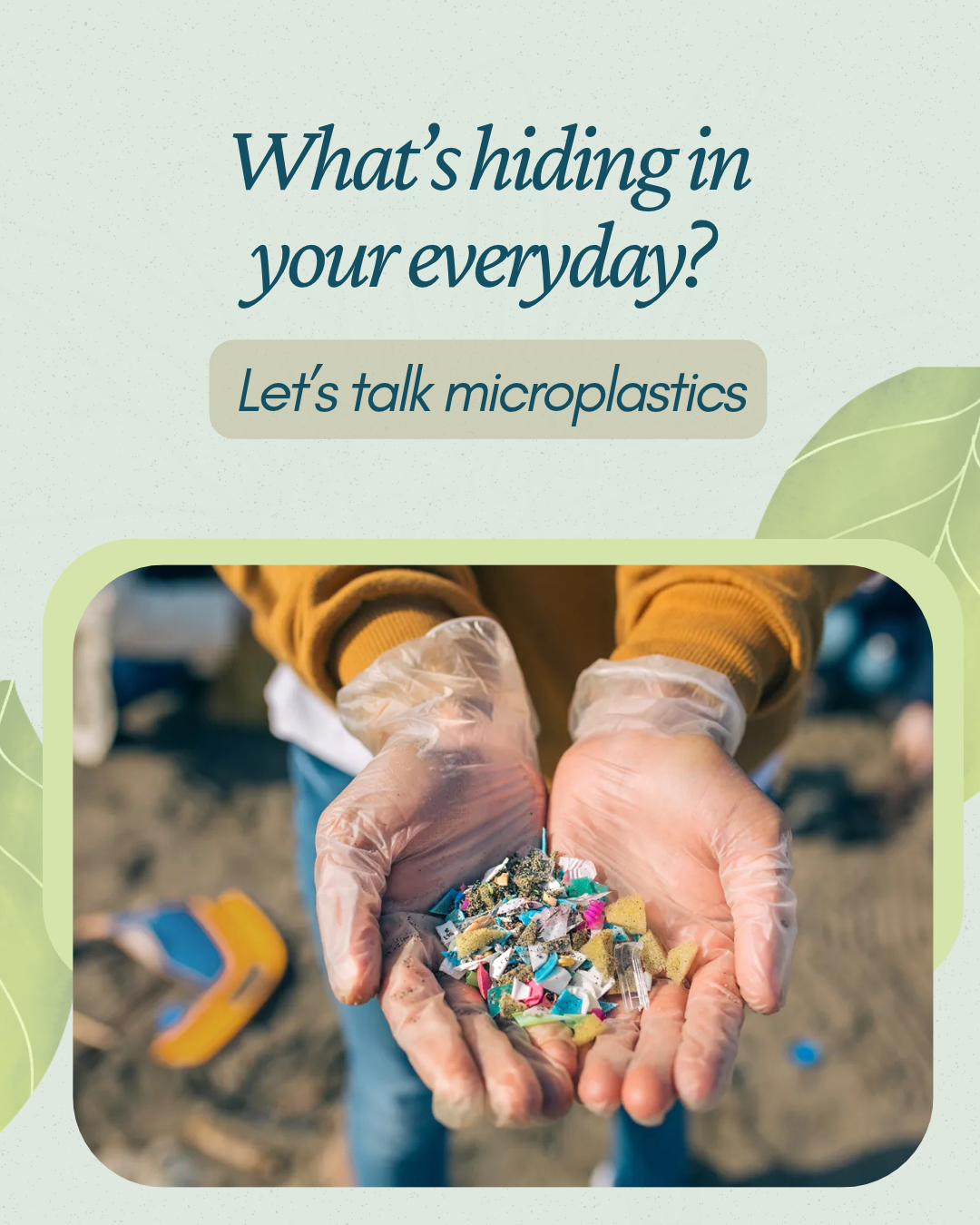
Microplastics are tiny pieces of plastic. Some form as larger plastic items break down. They’ve been found in our environment, including food, water, and air.
Researchers are investigating what happens when these particles enter our bodies.
In a 2024 study published in the New England Journal of Medicine, researchers examined fatty buildup removed from patients’ neck arteries. Patients whose samples contained microplastics or nanoplastics were more likely to experience a heart attack, stroke, or death during follow-up.
That finding deserves attention. It shows a connection, although it does not prove the plastic particles caused those outcomes.
Learn more about microplastics and everyday ways to reduce exposure!:
https://www.niehs.nih.gov/news/factor/2024/5/feature/4-feature-microplastics-and-nanoplastics
There is still more to learn about how different particles, amounts, and lengths of exposure affect our health.
When I learn about research like this, I think about the work our bodies do every day.
Your body is made of trillions of cells. They help turn food into energy, maintain your tissues, and keep things running.
When you’re walking, dancing, gardening, or laughing with someone you love, your cells are helping make that possible.
They also have their own protective systems.
Think about a busy kitchen. Cooking creates spills and mess, and a cleanup crew helps keep things manageable. When the mess builds up faster than the crew can handle it, things become harder to keep in order.
Our cells have their own balancing act.
The body naturally produces reactive molecules, including free radicals. Some have useful jobs. When there are more than our protective systems can manage, they can damage parts of our cells. That imbalance is called oxidative stress.
It’s one reason researchers study both environmental exposures and the ways our cells respond to them.
We don’t have to overhaul our lives overnight. Sometimes it starts with one small thing, like using a glass or ceramic container to reheat lunch.
Other days, it might mean adding another vegetable to dinner, making time for a walk, or giving ourselves an earlier bedtime.
These choices serve different purposes. Some help limit avoidable exposures; others support overall health. They give us practical places to start.
And please, don’t turn caring for yourself into another reason to feel guilty. Choose something manageable and build from there.
Sometimes we do things so automatically that we hardly think about them. Reheating lunch in a plastic container. Using an air freshener. Sitting in traffic.
If you’re curious about your own routine, this 15-question questionnaire invites you to look at everyday habits and possible environmental exposures. You might notice one small thing you’d like to change.
It’s an awareness tool, rather than a medical test. It cannot measure microplastics or oxidative stress in your body.
[Explore your everyday habits]
A quick note: LifeVantage provides this questionnaire and includes product recommendations and modeled scores. I’m an independent consultant with the company. Exploring those recommendations is entirely your choice.
I first learned about cellular activation in June 2012, and it’s been part of my daily routine for more than 14 years. Learning that our cells have their own protective systems changed how I thought about caring for my body. That’s why I keep sharing what I learn.
For me, caring for my health is about continuing to dance, travel, spend time with my family, and hopefully play with my grandkids at 90.
Maybe for you, it’s getting down on the floor with your grandchildren. Taking that trip you’ve been dreaming about. Working in your garden. Having the energy to enjoy your day.
Whatever comes to mind, let that be your reason to give yourself some attention today.
We can’t control everything we’re exposed to. We can keep learning, ask thoughtful questions, and make choices we feel good about.
And remember to do things that make you smile.
With love,
Monique